
Postcards from the campaign on “Actions for environmental justice from autonomous and community-based technological infrastructure”

materiales
19 agosto, 2025
sursiendo

Leer en español

We have just concluded our social media campaign presenting the research project “Actions for environmental justice from autonomous and community-based technological infrastructures.” We designed and shared a series of 16 postcards highlighting the importance of building technological infrastructures that are sustainable, accessible, and community-managed. This visual series was published consistently over the last four weeks, with 16 pieces that explore, week after week, the principles, challenges, and achievements of this research.

Each postcard is a window for reflection: some illustrate specific experiences of communities that have created autonomous environmental monitoring networks, others highlight free technological tools that enable collective participation in resource management, while others evoke the urgency of rethinking centralized and extractivist models, proposing horizons where knowledge and technology operate from a local, collaborative, and sustainable perspective.

Below we present the 16 images that make up this collective visual narrative, each one a seed of inspiration for imagining, building, and defending community technological infrastructures in the service of a more just planet.

Postal 1: Justicia ambiental desde infraestructuras comunitarias
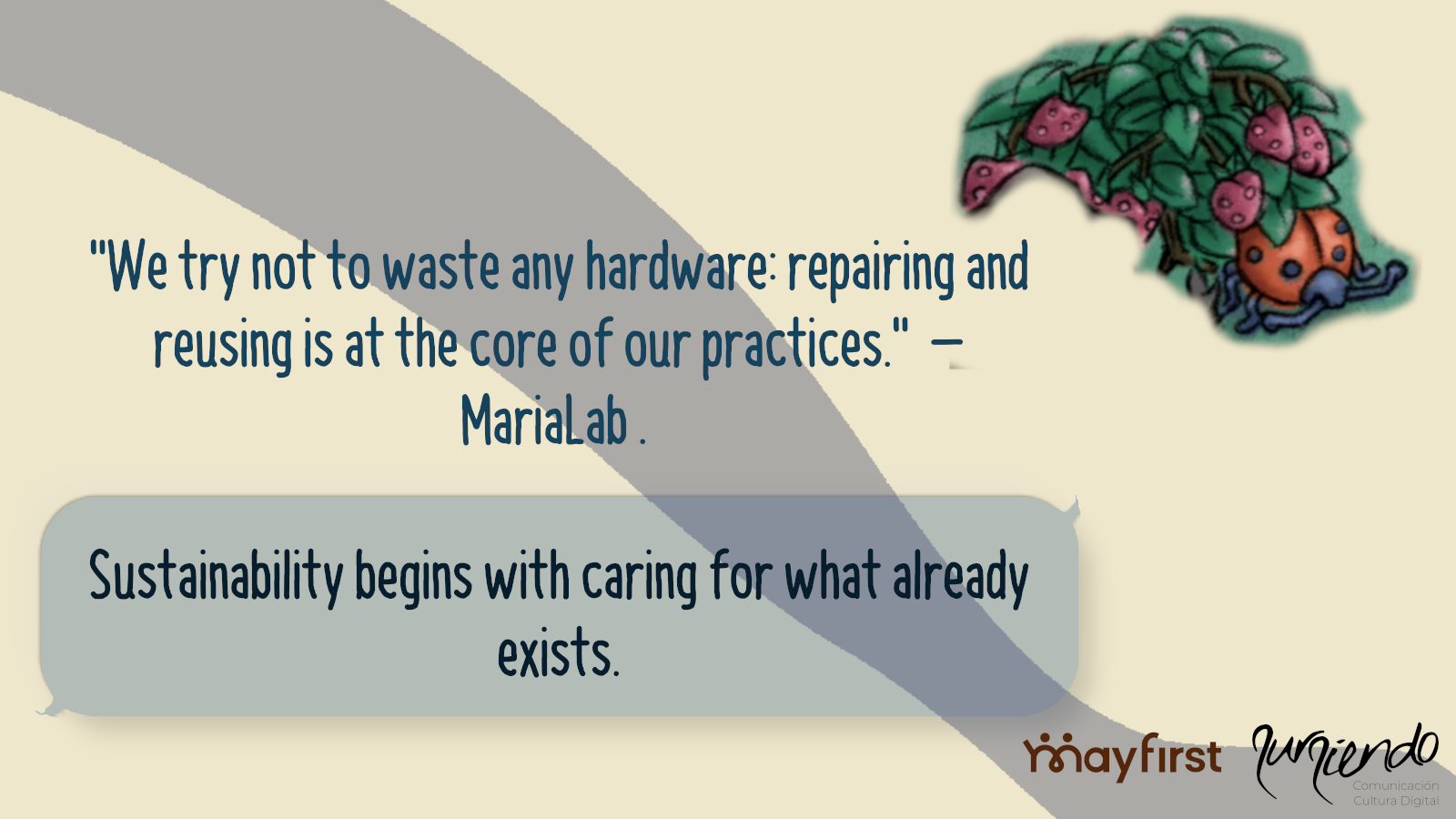
Extending the life cycle of hardware is a concrete action against digital extractivism. Not only does it reduce electronic waste, it also breaks with the extractive logic of planned obsolescence.
Postal 2: Saberes locales y tecnología libre
Donations, recycled hard drives, refurbished laptops, modem repair workshops… repair is not seen as a quick fix, but as the core of their practice.
Postal 3
This saves time, energy, and effort, and strengthens a network of mutual support and autonomy.
Postal 4
Lightweight websites for specific situations, creating pages that work in environments with limited resources. Technology that adapts to the territory, not the other way around.
Postal 5
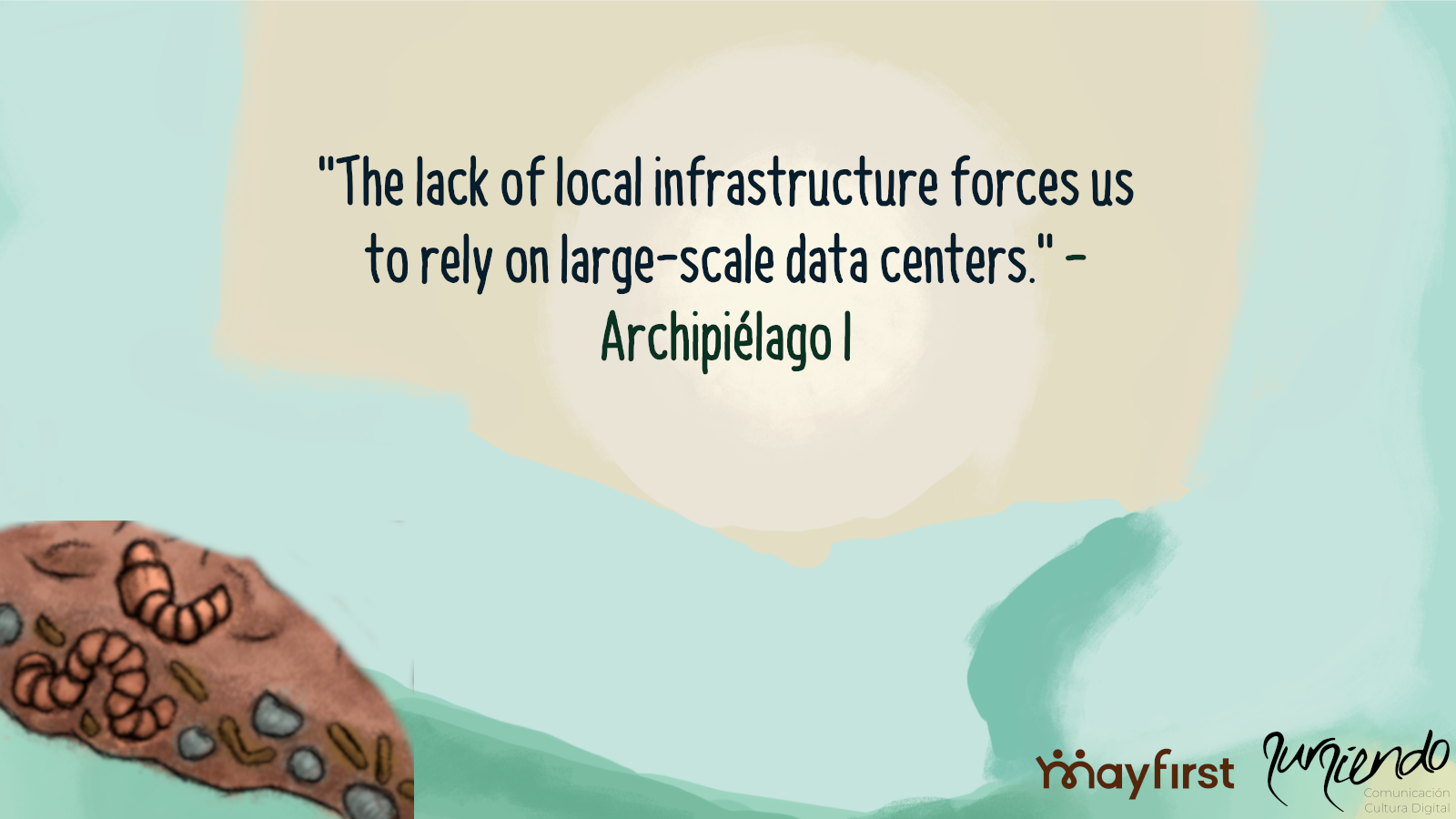
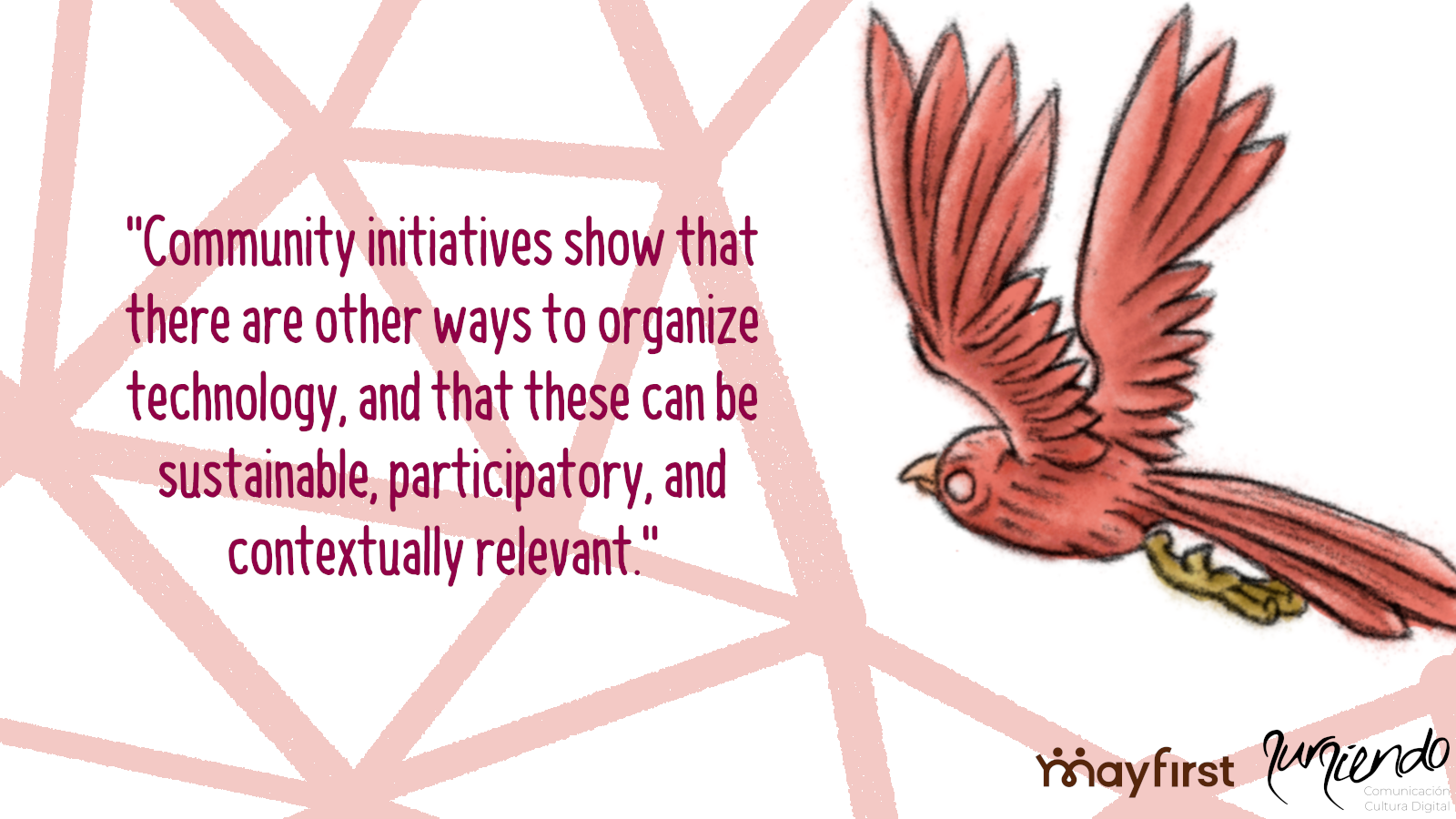
Centralization is not only technical, it is also political: the location of infrastructure is often dictated by urban connectivity hubs, which makes decentralization very difficult.
Postal 6
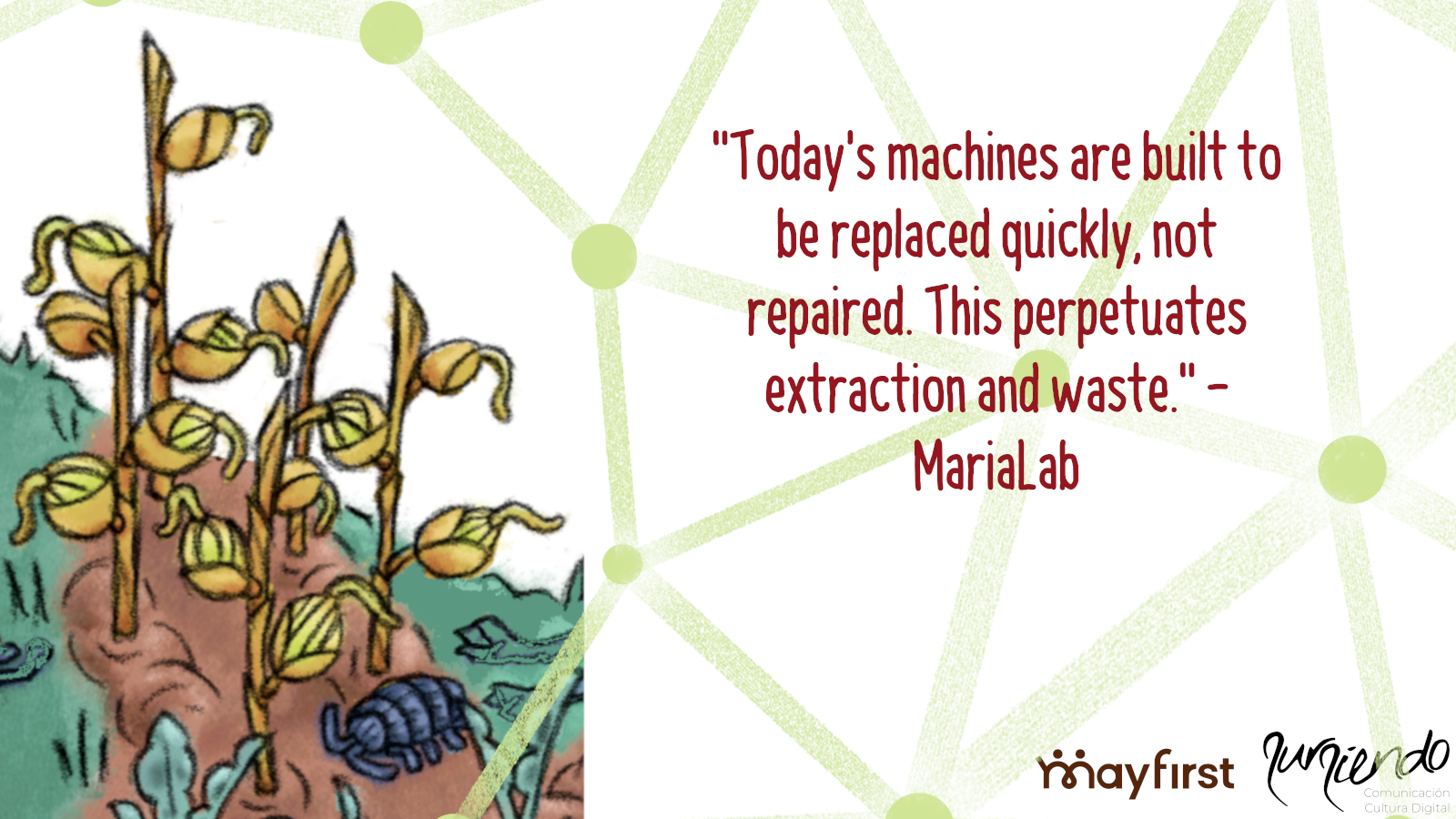
Many technologies are designed without considering reparability, and industrial design runs counter to the sustainability promoted by these infrastructures.
Postal 7
This idea clashes with ecological limits, and breaking with this cultural narrative is essential for building community-based alternatives that are fairer and more caring towards the planet.
Postal 8
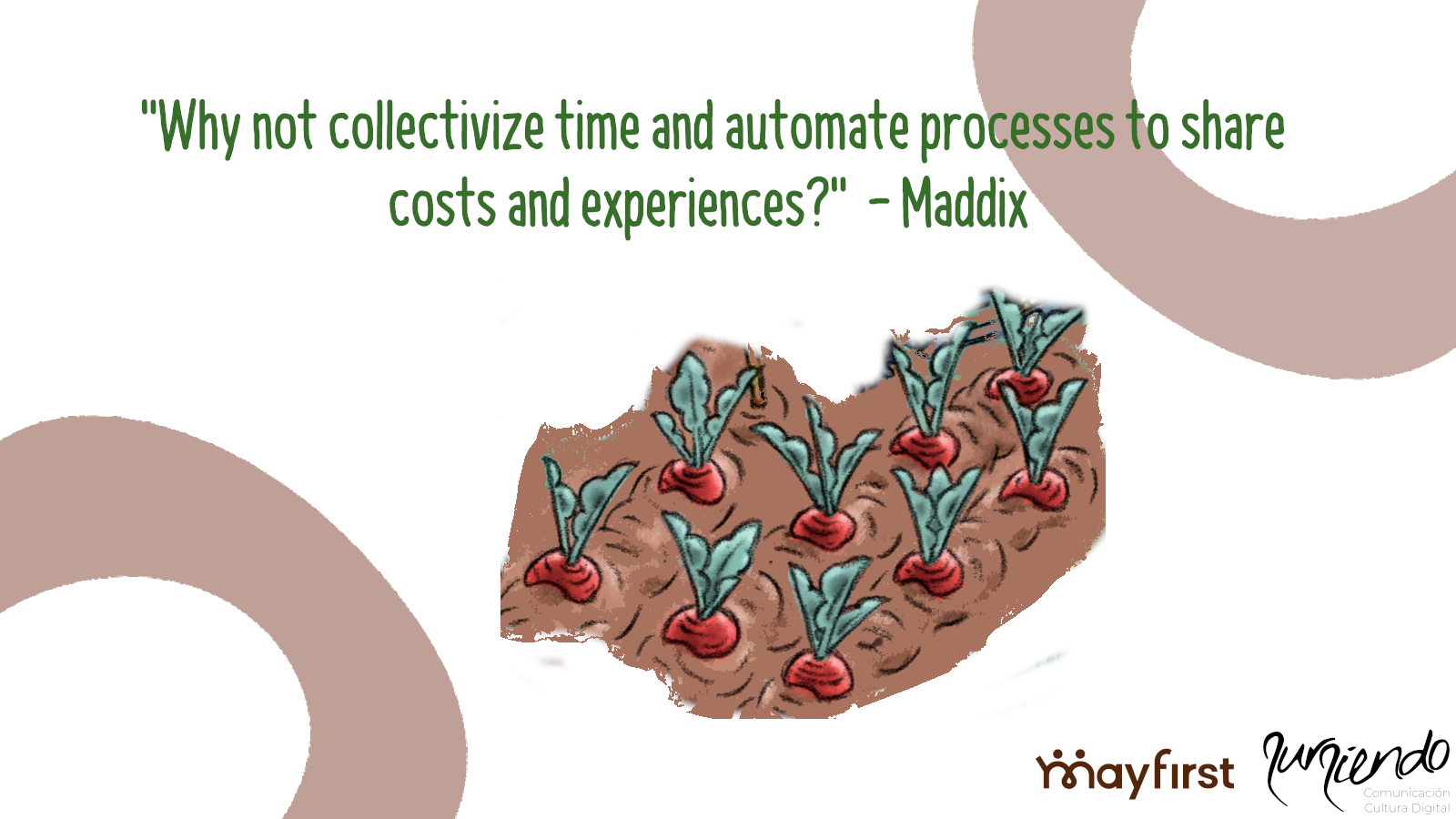
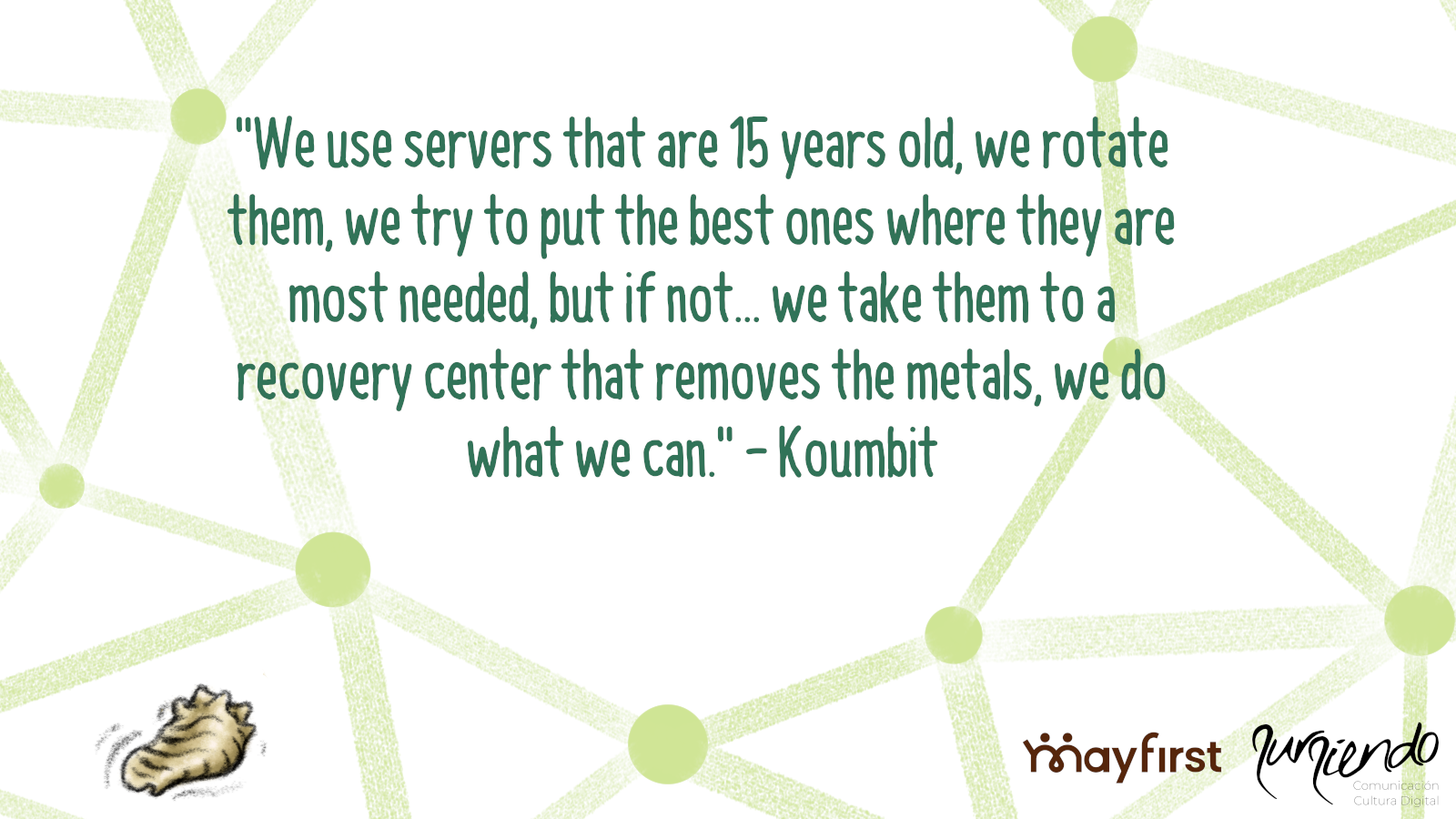
The ecology of time as a form of collective sustainability: sharing servers, sharing knowledge, sharing efforts—sustainability requires community, not individualism.
Postal 9
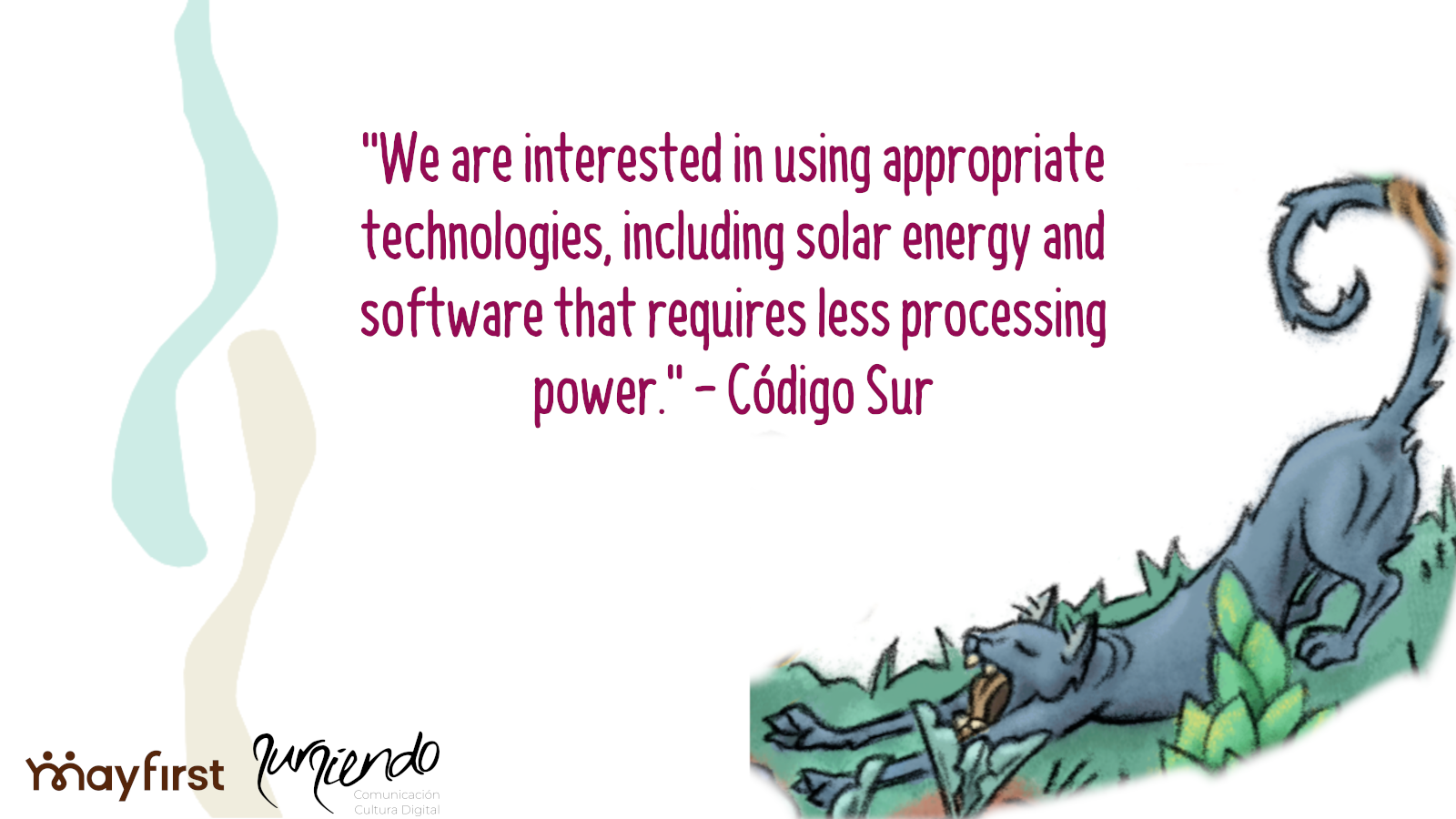
Articulating ecological practices and digital sustainability. Their vision of “appropriate technologies” is based on harmony with the environment and the community, less consumption, and more context. Software and hardware at the service of the common good.
Postal 10
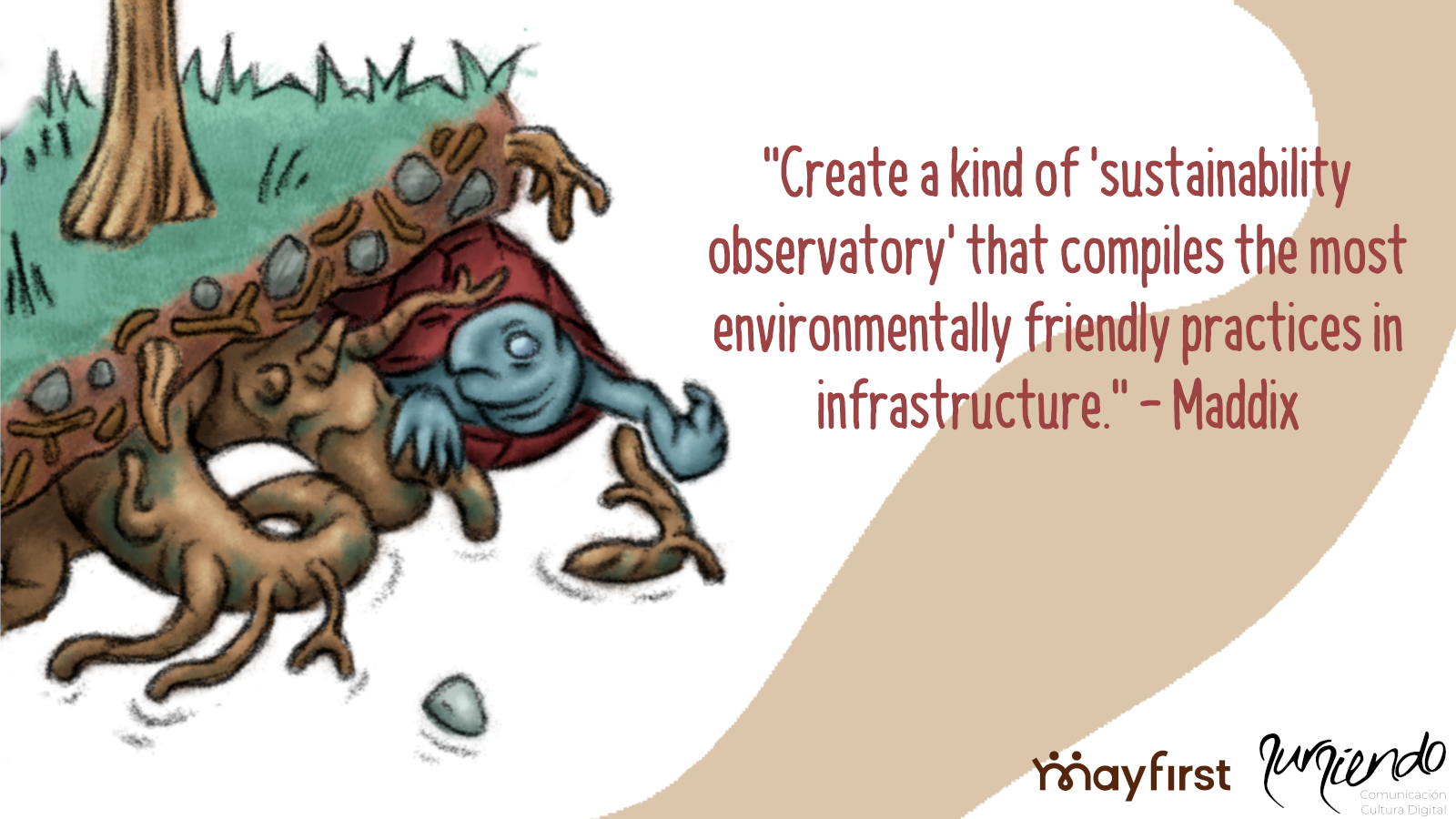
Systematizing what is already being done well: an observatory would not only document, but also enable peer learning, replication of useful practices, and strengthening of the ecosystem of sustainable autonomous infrastructures.
Postal 11
Infrastructures as a mutual support network. Not competition, but collaboration—we need this support to navigate change.
Postal 12
GreenNet points out a real tension: the path to ecological sustainability must be compatible with technical stability; we cannot stop functioning while we seek to transform.
Postal 13
Sharing infrastructure, knowledge, and care is a clear path to sustainability.
Postal 14
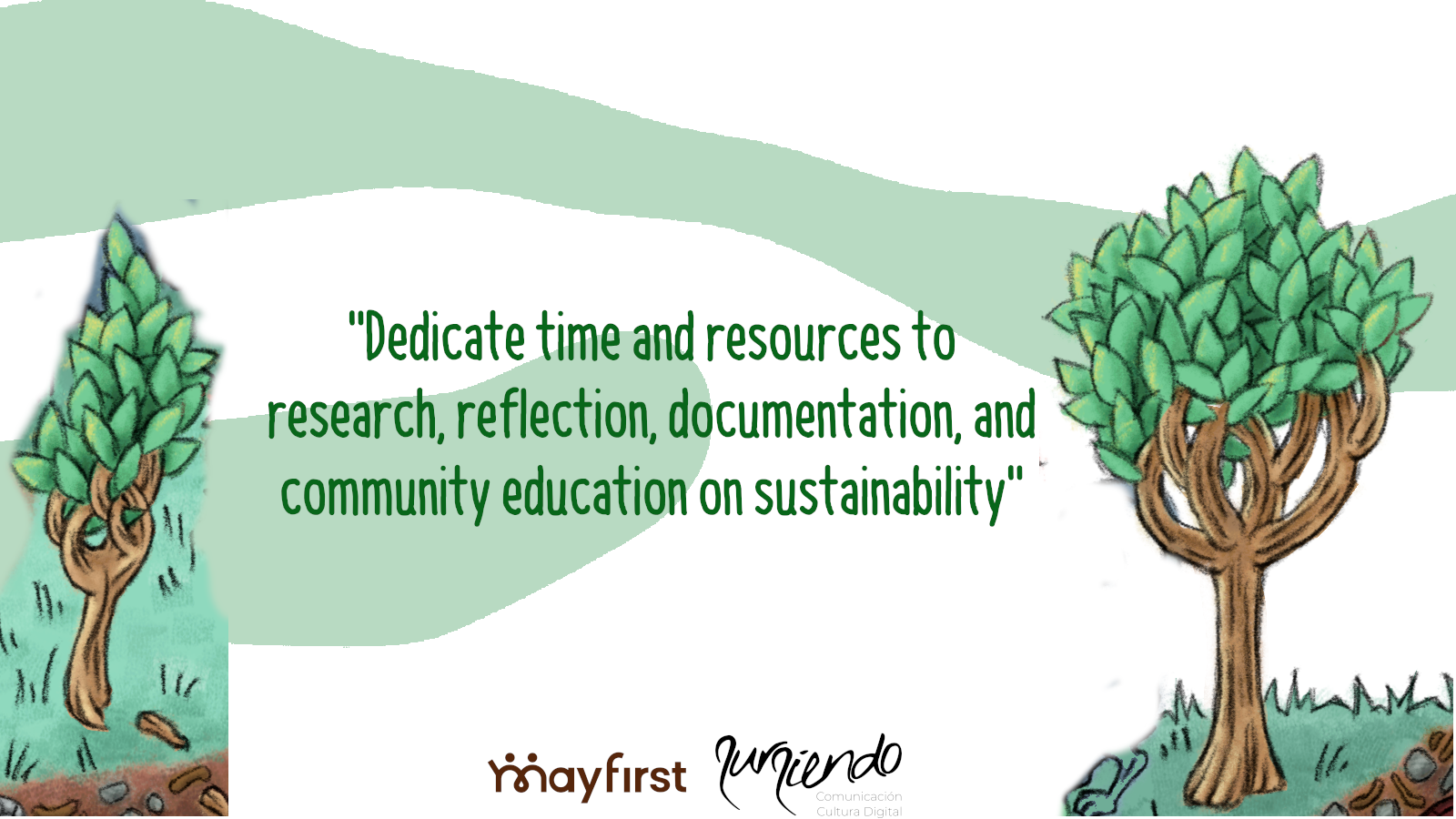
Because there is no sustainability without learning: collectively training, documenting, and rethinking how we use technology is as vital as repairing it.
Postal 15
In contrast to the corporate model of individualization, solidarity networks offer a different approach: sharing servers, tasks, and learning allows for the use of fewer resources and strengthens autonomy.
Postal 16
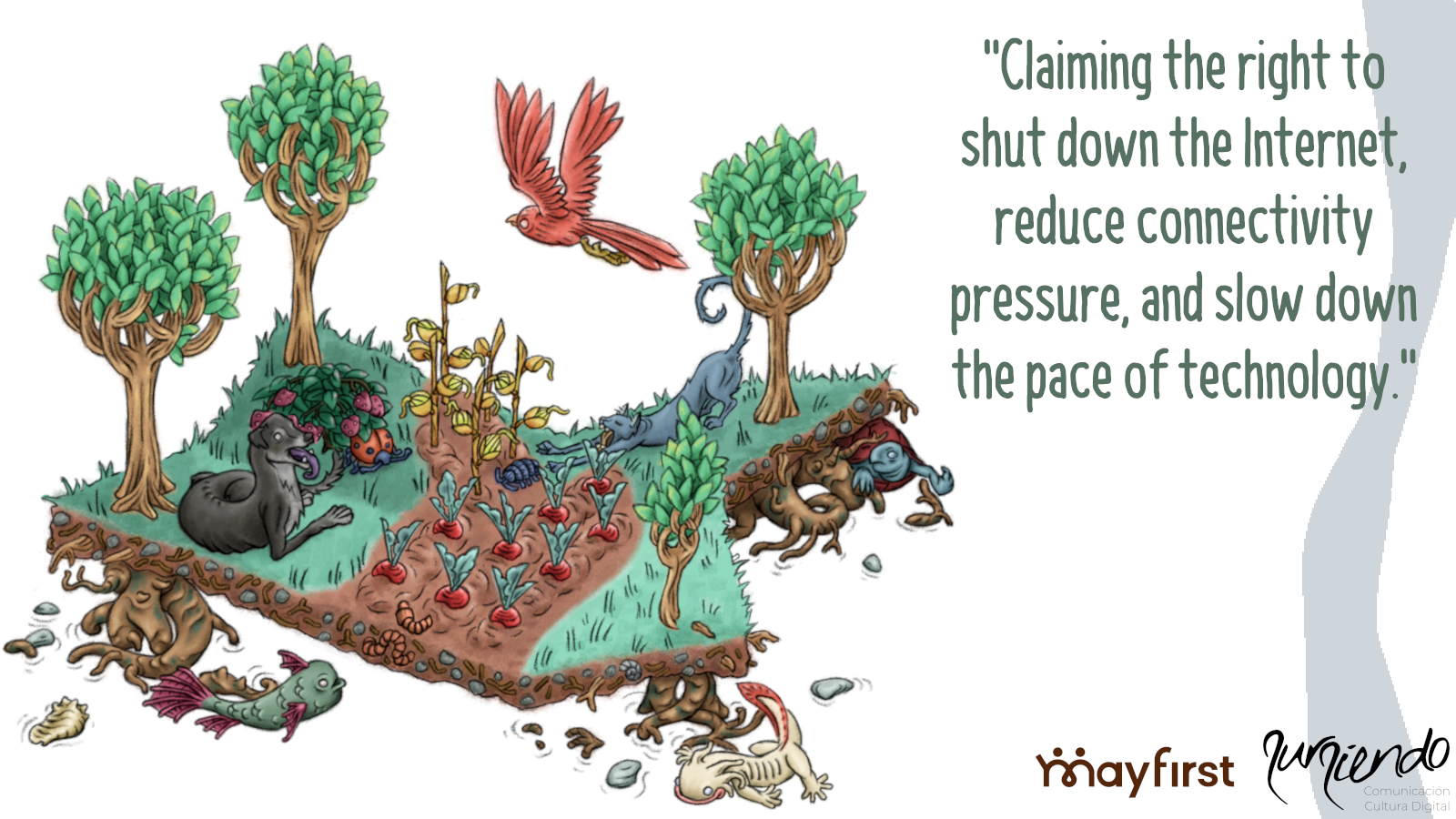
It’s not just about being “always connected,” but about reconnecting with other times, with other values; turning off is also a right.

@sursiendo